
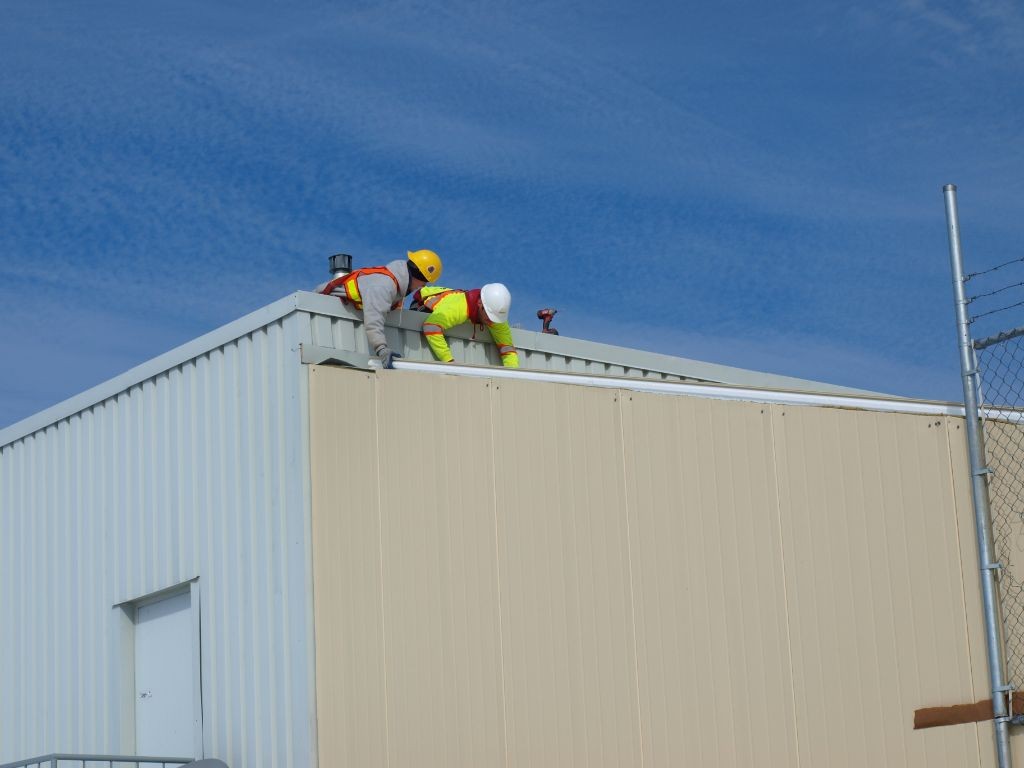
A correctly sealed, insulated panel system ensures an effective thermal envelope and a drier interior. When you avoid unnecessary gaps between the panels, you can effectively control temperature and humidity. Avoiding gaps is also essential to ensure the structural integrity of the installed panels is not compromised.
This guide explains why sealing is so important and outlines best practices for preventing structural damage.
Why Do You Need to Seal the Joints?
Before we get into installation tips and best practices, it’s worth taking a moment to understand why sealing joints is so important in the first place.
For starters, even insulated panels with the highest R-value will lose some of their effectiveness if air can pass between gaps in the joints. Air leaks allow warm air in the winter to escape from the building’s interior to the exterior.
By compromising the performance of the panel’s built-in insulation, these gaps force your HVAC system to work harder, which increases your energy costs.
Beyond compromising the thermal barrier, these gaps allow moist air to enter. Once that moist air contacts cooler interior surfaces, it can cause condensation to build. This accumulating moisture can result in mould, corrosion and degradation of inventory and the panel itself.
For any type of insulated panel to act as an effective thermal and moisture barrier, it must be installed so that the panels form a continuous barrier from exterior to interior. A single unsealed section can compromise the whole system.
Best Practices for Sealing Insulated Panel Joints
Here are essential practices to follow for effective sealing and long-term performance.
Only Use Manufacturer-Recommended Sealants
For any type of insulated panel, the manufacturer will have specific sealants that they either include with the product or recommend.
Most will recommend applying a continuous bead of sealant to both the interior and exterior joint surfaces. If you’re unsure what to use, consult the manufacturer and read the guide they provide.
Apply Sealant Evenly
Once you know which type of sealant to use, make sure you apply it evenly. This will help you avoid air gaps that allow air and moisture to pass from one side of the wall panel to the other.
It’s also a good idea to make sure that the joints are clean before you apply the sealant. Work sites can be dusty, so a quick wipe-down of the joint surface before the sealant is applied can make a big difference in keeping the seal.
Seal Before Panels Are Positioned
Applying your sealant before the panels are positioned can help you avoid messy smearing. This will help you avoid missing spots, giving you a much better chance of a proper bond.
Maintain Sealant Continuity
While it seems obvious to apply sealant to all straight edges, you also need to account for corners, transitions, and any holes you have added to the panel for doors, windows, and pipes.
This is particularly important for colder climates and high-moisture environments. In these cases, you may even want to go over any sort of field cuts you have made to accommodate various features with a second layer of sealant.
Allow Proper Drainage and Venting
When panels run vertically, the bottom joints should allow for drainage. Even a well-sealed structure can result in moisture buildup. Having pooled water along the seams can wear away at the sealant over time.
Protect Panels and Sealants Prior to Installation
Before you install and seal your panels, make sure you store them correctly.
Most panels should be stored on a flat surface that is off the ground. You can even use spacers to protect the panels from damage and moisture buildup.
Speaking of which, you should avoid exposing your panels and sealants to direct water and other moisture before they’re installed, as this can compromise their seals.
Choose the Best Insulated Panels
While following the correct installation and sealing techniques is critical, it’s also essential to choose high-quality insulated panels that are designed to deliver lasting performance.
As a fully Canadian-owned and operated manufacturer, Structural Panels Inc. has designed our insulated panel systems to withstand the harshest conditions. Our ISOWALL Insulated Panels and ROCKWALL Fire Rated and Insulated Panels stand out as two of the best options on the market today.
ISOWALL Panels feature a rigid EPS core and steel facings that are permanently bonded together for lasting durability and superior thermal performance. ROCKWALL Panels use a mineral wool core that provides excellent thermal insulation and lasting fire resistance.
Both systems feature tongue-and-groove interlocking joints engineered to simplify installation and ensure lasting seals. Once installed, they provide outstanding moisture control and an air-tight finish that ensures they will continue to perform throughout their long-lasting lifespan.
Our two main offerings are particularly well-suited for building a tight, moisture-resistant envelope.
Get Started Today
When you choose ISOWALL or ROCKWALL Panels from Structural Panels Inc., you’re deciding to go with a panel system engineered for reliable joint sealing and long-term performance. To request a sample and learn more about your options, get in contact with us today: