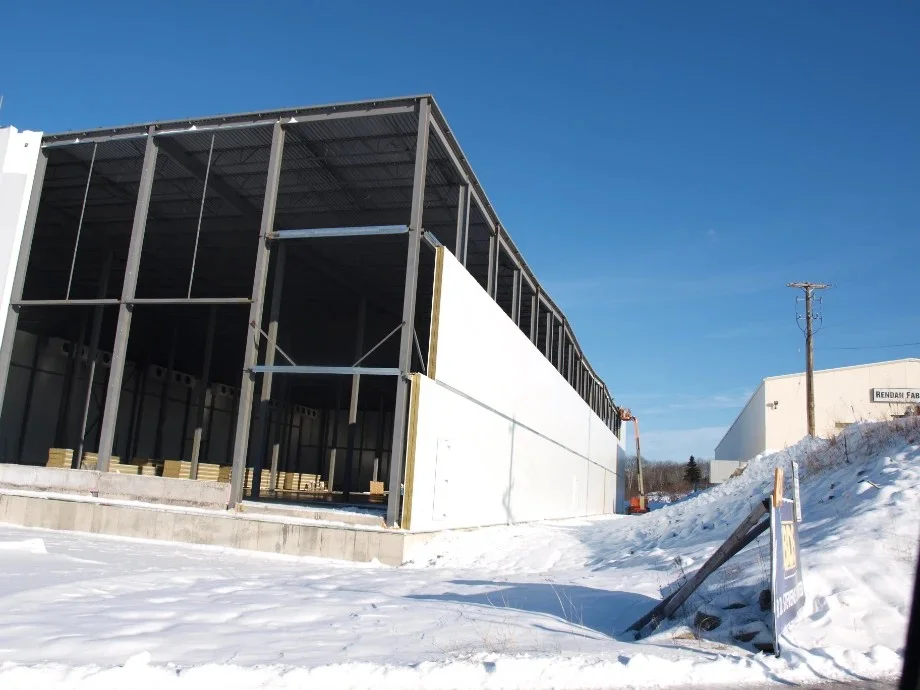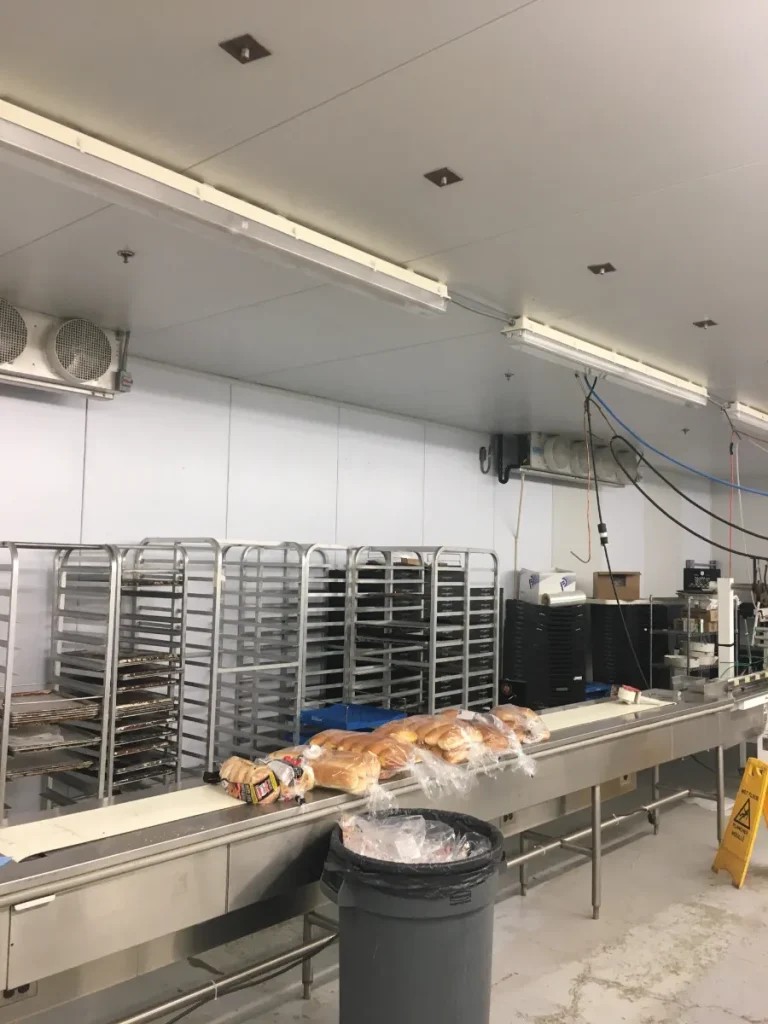

Structural insulated panels (SIP) play a starring role in the future of energy-efficient construction.
Consider how much energy is required to heat or cool a large metal-framed building. A high school gymnasium. A community center. A house of worship. A cold-storage facility. If the building envelope leaks even a little or transfers too much heat, the structure will bleed energy.
Enter Isowall Insulated Panels. Built off-site, these SIPs go up quickly, making it easier to complete construction on time. Once up, they can cut a large metal-framed building’s energy usage by almost a quarter.
What Are Structural Insulated Panels?
Isowall Insulated Panels and other SIPs are basically prefabricated walls, designed to be airtight and to prevent heat transfer. They incorporate structure and insulation into a single unit. The meat of the panel consists of sturdy insulating foam, formed into a panel with a built-in air barrier. This insulating core is then sandwiched between panels of oiled wood to create a custom-fit, done-for-you insulated wall.
After rigorous testing for integrity and heat transfer, the SIP can then be transported to the construction site and installed then-and-there. This saves the construction team the extra effort of mounting, insulating, and sealing the wall on-site, while drastically reducing the likelihood of on-site human error.
Do SIPs require a specialized construction team?
No. Any competent construction team can install them with no extra certifications. Each custom order includes a project-specific checklist for the foreman to follow.
Isowall Insulated Panels can be integrated into almost any building with a metal frame. The cost is often more than justified by the following benefits:
- Modular off-site construction speeds up the building project.
- The energy efficiency of the completed building drastically reduces utility expenses, increasing Net Operating Income.
- The owner can reap the benefits of a higher “green” certification.
How Good Are Isowall Insulated Panels?
Isowall Insulated Panels have reduced the energy used to climate-control large open building envelopes by up to 47%, attaining LEED Platinum Status on spaces that almost never earn them.
They do this with a combination of industry-leading properties:
- Superior Insulation. Isowall Insulated Panels perform fantastically, without extra insulation, on Conduction, Radiation, Convection, and Heat Infiltration. Our 6” Isowall SIP walls have been rated R-24 (R-21 or higher is considered excellent insulation), while our Isowall 10” ceilings have been rated at R-40 (R-38 or higher is considered excellent).
- Reduced Air Leakage. With fewer holes to plug, SIPs have been measured to reduce air leakage by up to 1,500% over stick-frame buildings. A SIP structure leaked only 200 cubic centimeters of air per minute at a pressure of 50 pascals, compared to 3,400 cubic centimeters per minute measured for a stick-frame building of comparable size.
Contact SPI to discuss more benefits of integrating Isowall Insulated Panels into your metal-framed green-building project.